Scegli la tua regione

Seleziona la regione che meglio si adatta alla tua posizione o alle tue preferenze.

Scegli la lingua del sito

Questa impostazione controlla la lingua dell'interfaccia utente, inclusi i pulsanti, i menu e tutto il testo del sito. Seleziona la tua lingua preferita per la migliore esperienza di navigazione.

Scegli le lingue per gli annunci di lavoro

Seleziona le lingue per gli annunci di lavoro che desideri vedere. Questa impostazione determina quali annunci di lavoro ti verranno mostrati.
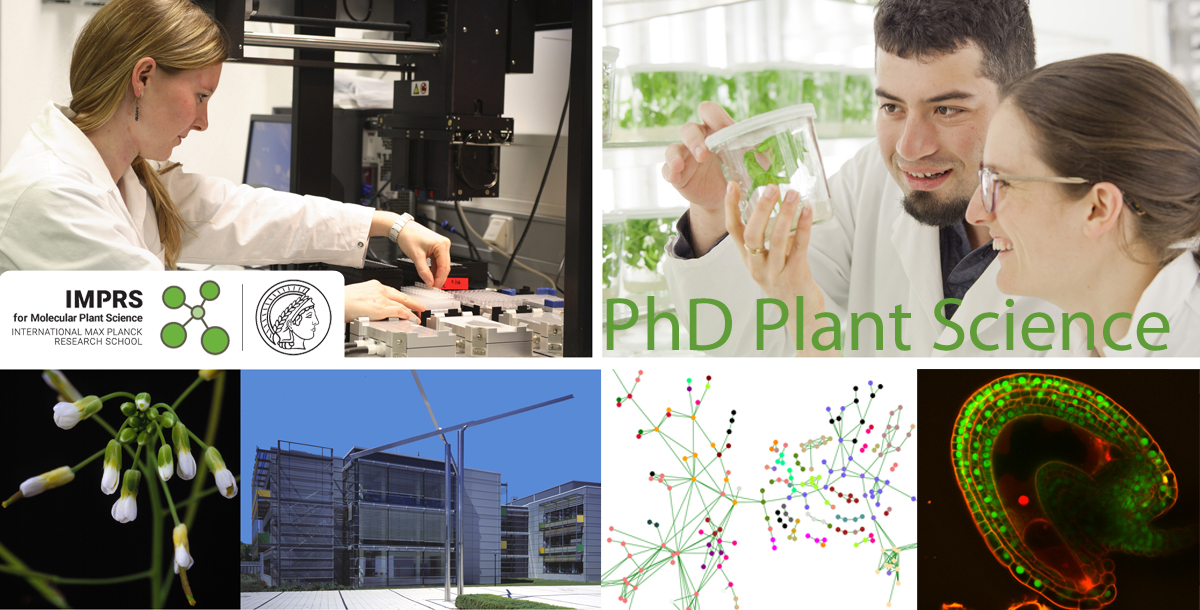
International Max Planck Research School IMPRS for Molecular Plant Science

International Max Planck Research School IMPRS for Molecular Plant Science

Visita il sito web

Informazioni sul datore di lavoro

The IMPRS for Molecular Plant Science (IMPRS MolPlant) is a joint initiative of the University of Potsdam and the Max Planck Institute of Molecular Plant Physiology, located in Potsdam near Berlin, Germany. The doctoral program was established in 2007. We are accepting talented graduate students into the IMPRS at regular intervals. Our graduate students conduct their research projects under the supervision of our faculty members.

Research Focus

Research in modern plant science is at the core of the IMPRS. Plants and their seeds, for example rice, wheat, maize and pulses, are vital for human nutrition. Understanding the fundamental processes of how plants grow, reproduce and interact with the abiotic and biotic environment is of great scientific interest and, ultimately, has societal and economic implications. 

We conduct curiosity-driven, basic research centering around the following questions:

  • How do primary physiological processes such as photosynthesis, central metabolism and respiration function, and how are their activities regulated?
  • How do plants form their organs, tissues, cells and sub-cellular structures, and how is the formation of different organs and structures coordinated? 
  • How is epigenetic information established and transmitted and how do epigenetic processes impact on plant development?
  • How do plants and soil fungi interact to establish arbuscular mycorrhiza (AM) symbiosis, and how are the accommodation of AM fungi inside root cells and the plant’s physiological and developmental state interconnected?
  • How do exogenous, environmental factors such as light, temperature, and availability of water and nutrients influence plant physiology, development and the interaction with microorganisms?
  • How are exogenous and endogenous signals perceived, and how is information transmitted and integrated to ensure plant health, survival, biomass acquisition and seed formation?
  • How can we manage, analyse and integrate complex, large-scale genomic, epigenomic, transcriptomic, translatomic, proteomic and metabolomic datasets to answer biological questions and generate new hypotheses?

To answer these questions, we use an interdisciplinary approach combining molecular biology, genetics, genomics, epigenomics, metabolomics, biochemistry, biophysics and microscopy with bioinformatics and modelling. We work with Arabidopsis thaliana, tobacco, tomato, Lotus japonicus, rice and other model plants, and make use of genetic diversity by studying natural accessions, closely related species, and introgression populations. 

Website of the IMPRS: https://www.mpimp-golm.mpg.de/IMPRS-PhD 

Sede del datore di lavoro

Trova datori di lavoro affini

Fraunhofer-Gesellschaft
Fraunhofer-Gesellschaft Germania 0 posizioni aperte
University of Cologne
University of Cologne Germania 40 posizioni aperte
German Aerospace Center (DLR)
German Aerospace Center (DLR) Siegburg, Germania 5 posizioni aperte
Altri datori di lavoro

Questo potrebbe interessarti

The Hidden Security Risk Above Our Heads
The Hidden Security Risk Above Our Heads University of Oulu 4 min. di lettura
Buried treasure: How the ocean’s history reveals our climate’s future
Buried treasure: How the ocean’s history reveals our climate’s future NIOZ Royal Netherlands Institute for Sea Research 4 min. di lettura
Using AI to accelerate recycling
Using AI to accelerate recycling OFFIS 4 min. di lettura
Building belonging: Rethinking diversity in the classroom
Building belonging: Rethinking diversity in the classroom Free University of Bozen - Bolzano 4 min. di lettura
Why KTH Is the Ideal Place to Shape the Future Through Your Work
Why KTH Is the Ideal Place to Shape the Future Through Your Work KTH Royal Institute of Technology 5 min. di lettura
Altre storie

Trova lavori correlati

Upcoming PhD positions at the International Max Planck Research School for Living Matter
Upcoming PhD positions at the International Max Planck Research School for Living Matter International Max Planck Research School for Living Matter (IMPRS-LM) 4 mesi fa
Physician-Scientist in Neurology
Physician-Scientist in Neurology University of Luxembourg 9 mesi fa
Doctoral researcher in Network Traffic Obfuscation
Doctoral researcher in Network Traffic Obfuscation University of Luxembourg 6 mesi fa
Postdoctoral Researcher in Computer Vision
Postdoctoral Researcher in Computer Vision University of Luxembourg 5 mesi fa
Postdocs on ultrafast soft-X-ray metrology and high-harmonic metrology
Postdocs on ultrafast soft-X-ray metrology and high-harmonic metrology Advanced Research Center for Nanolithography ARCNL 1 anno fa
Full Professorship in the area of Leadership (f/m/d)
Full Professorship in the area of Leadership (f/m/d) WHU – Otto Beisheim School of Management 4 mesi fa
Altri lavori